
 +420 777 008 739

 info@onedent.cz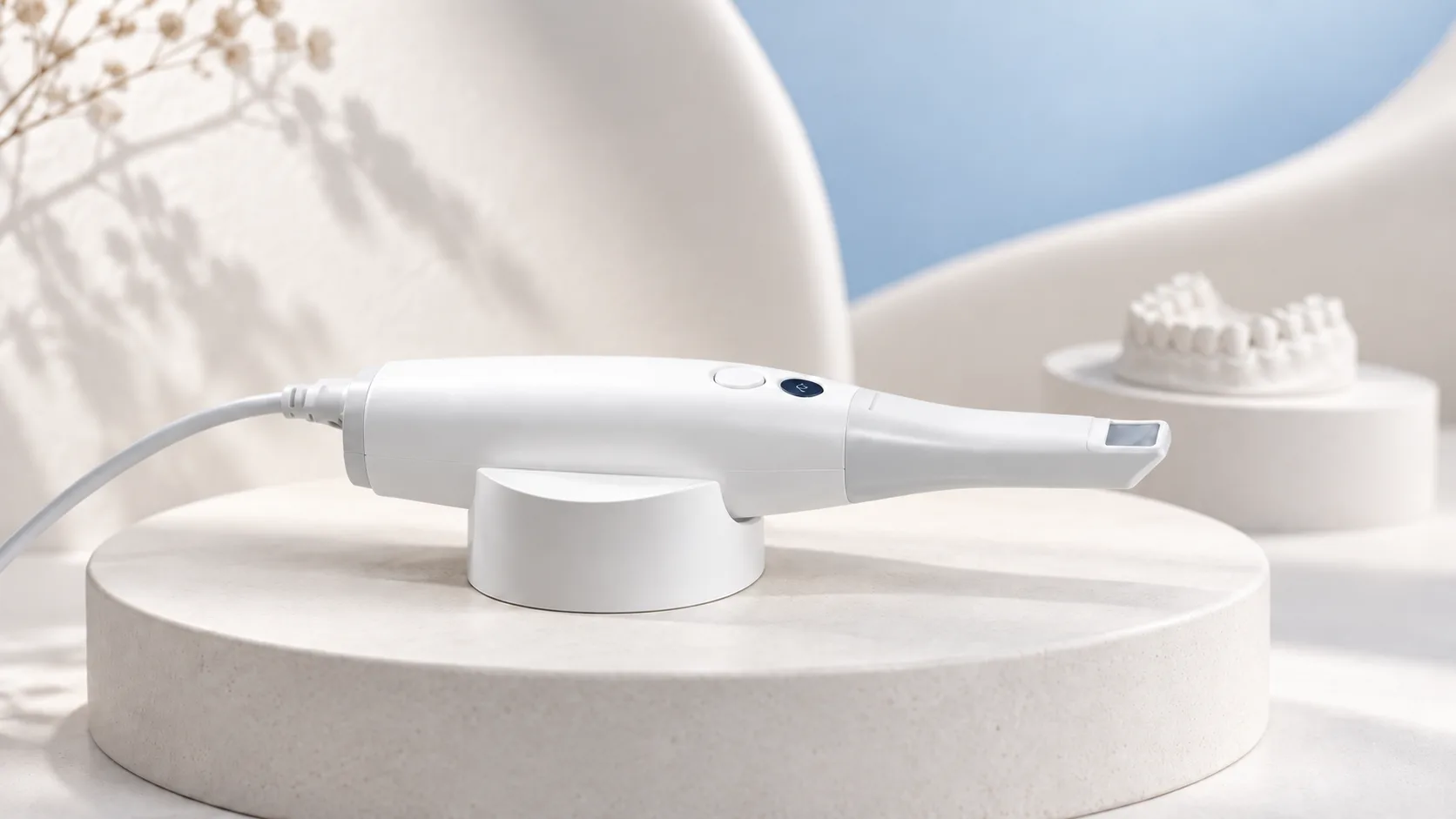
A gag reflex at the dentist is not weakness or oversensitivity. It is an involuntary protective reaction that you simply cannot switch off. The good news is that for many crowns, bridges or veneers a conventional impression can be replaced by a scan of the teeth. No tray full of material, and the option to pause the examination at any time.
Why impressions in particular trigger the gag reflex
The gag reflex protects the throat and airways against a foreign body. It can be triggered by touching the soft palate, the back of the tongue or the back wall of the throat. Everyone’s sensitivity in these areas is different. Some people are bothered by a toothbrush, others only start to feel uncomfortable during an X-ray or a conventional impression.
When taking an impression of the upper teeth, the tray can reach across the palate and the impression material gets close to the back of the mouth. The size of the tray, the taste and consistency of the material, or the feeling of a full mouth are exactly what can set off the gag reflex.
The material also has to set for several minutes. During that time it is harder to talk, and the impression cannot simply be paused and then resumed. If the tray comes out too early, the whole impression usually has to be repeated. For someone already afraid of gagging, this loss of control can be the hardest part of the examination.
A single unpleasant experience can then easily create the impression that making any crown or other restoration has to go the same way.
Digital impressions: a scan instead of impression material
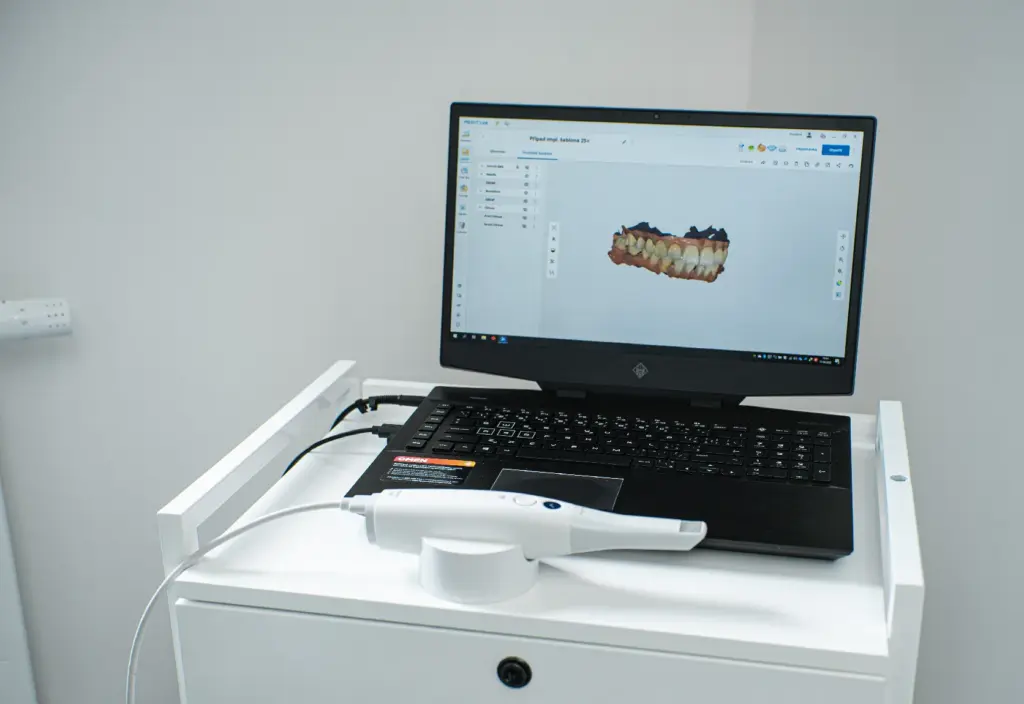
With a digital impression, a small camera captures the teeth and gradually builds an accurate three-dimensional model on a computer. No tray of material goes into your mouth, nothing sets and nothing runs towards your throat.
The main advantage for a patient with a gag reflex is that the scan can be paused at any moment. As soon as you feel you need a break, you give the agreed signal, we take the camera out, and after a moment we carry on where we left off.
If part of the digital model is missing, only that area needs rescanning. With a conventional impression the whole procedure would usually have to be repeated.
Research also confirms that digital impressions are better tolerated. A 2024 systematic review describes one measurement in which patients rated the discomfort of the procedure on a scale from 0 to 100. The digital impression scored an average of 6.5, the conventional impression 44.9.
When a scan helps and when it does not solve the gag reflex
A scan can remove one specific trigger — the impression tray and material. It does not cure the gag reflex itself.
A scan often helps when making crowns, bridges and veneers, when planning a smile or when producing a study model. Whether it can completely replace a conventional impression depends on the extent of the planned work and the situation in the mouth. The dentist therefore decides on the right approach only after an examination.
A scan does not help with X-rays, which may still need a sensor placed in the mouth. Nor does it replace the suction tube, the mirror or work around the back molars. In these situations breaks, a different position or an adjusted approach can help, but the trigger itself cannot always be removed.
If your gag reflex is so strong that it gets in the way of a routine check-up, tell us in advance. A scan alone may not be enough in that case, and the next steps need to be planned individually.
You can write straight into the “Purpose of visit” field in the booking form that you have a strong gag reflex.
How to ease the gag reflex at the dentist
- Mention it right at the start. The dentist can change the order of the steps, plan shorter stretches of work and allow for breaks.
- Agree a hand signal. A raised hand can mean you need the examination stopped immediately. You don’t have to try to speak with instruments in your mouth.
- Breathe slowly through your nose. If your nose is clear, focus on breathing in and out steadily during treatment. It may not stop the reflex, but it helps you keep a calmer rhythm.
- Work in shorter stretches. Some people are helped by more frequent breaks, others by sitting more upright or a different examination approach. The solution is tailored to what triggers the reflex in you.
There is no single trick that works for everyone. What matters most is that the dentist knows about the reflex and that you can stop the procedure at any time.
Frequently asked questions
What helps with a gag reflex at the dentist?
Removing the specific trigger helps most. For impressions, a scan can replace conventional material in many cases. For other procedures, agreeing things in advance, breaks, calm breathing and a hand signal all help.
How do I stop gagging at the dentist?
There is no reliable method that works for everyone. Mention the reflex in advance, breathe through your nose and agree a clear signal for a break. The dentist can then adjust your position, the length of each step and the tools used.
Does a scan help with X-rays too?
No. A scan creates a three-dimensional model of the tooth surface, while an X-ray also shows parts the camera cannot see. For some X-rays a sensor therefore still has to be placed in the mouth.
Do I need treatment under sedation because of my gag reflex?
Not necessarily. If the reflex is triggered mainly by impression material, a scan may solve the problem. If your gag reflex also prevents a routine examination or other procedures, the dentist will first assess how strong it is and discuss the right next steps with you.
Impressions need not be a reason to delay treatment
If you are putting off a crown, bridge or veneers because of conventional impressions, tell us about your gag reflex when you book. In many cases impression material can be replaced by a scan, which we can pause at any time.
Onedent is accepting new patients and is contracted with all Czech health insurance companies. Call +420 777 008 739 or fill in the booking form.
 Article author


 Approximate reading time: 6 min
  Updated: 01.09.2026