
 +420 777 008 739

 info@onedent.cz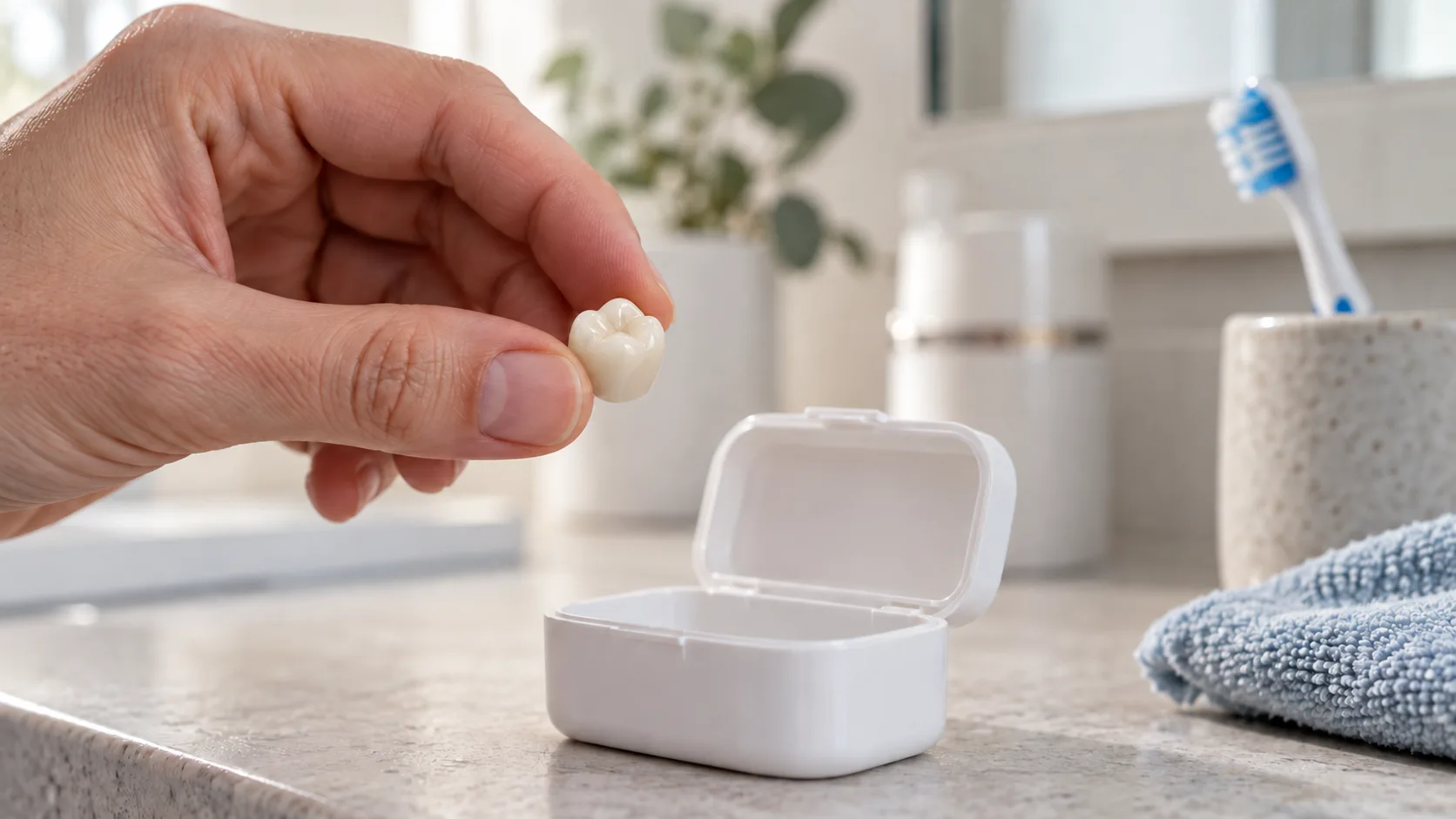
Before you get to the dentist, though, you need to protect the prepared tooth underneath and not rush anything. Keep the crown safe, don’t glue it or put it back on at home, and don’t bite on the exposed side. What happens next depends on the condition of the tooth under the crown, and on whether there is also pain, swelling, bleeding or an injury.
What to do straight away, before you call anyone
- Find the crown and keep it safe. Put it in a small box and bring it with you to the surgery. In many cases it can be reused.
- Don’t touch the inside of the crown. Don’t scrape or rinse out the remains of the cement. What is left inside helps us work out why the crown came loose.
- Don’t bite on the affected side. The exposed stump — the ground-down part of the tooth under the crown — is more easily damaged.
- Keep cleaning the stump gently. Brush over it lightly so that plaque does not build up around it.
- Don’t put the crown back on yourself. Without being fixed it can come loose again, and you risk swallowing or inhaling it. Leave it in the box.
Even one harder mouthful can damage the exposed stump. The crown might then no longer hold, even though the rest of the tooth was originally fine. If the stump stays intact, it is often enough to clean the crown and cement it back on. This is routine treatment within restorative dentistry and prosthetics.
What the crown tells you and when to book
The look of the crown can tell you how quickly to book. You cannot reliably judge the condition of the tooth underneath at home, though.
The crown is empty inside. This is often a case of the cement giving way and the crown separating from the tooth. If the area does not hurt, is not swollen, is not bleeding and the crown did not come off as a result of an injury, call the surgery during normal opening hours.
A post is sticking out of the crown. A metal or white pin is usually anchored in the root of the tooth. Book as soon as possible, because the post may have come loose along with the crown. The dentist can only assess the condition of the root at an examination, or on an X-ray.
A bridge has come loose. A bridge is held on several teeth and sometimes comes loose on one side only. You may notice that it moves slightly when you bite, or that there is a smell under it. Don’t put off the visit — plaque can build up and decay can develop under the loose part.
If your situation matches none of these, call the surgery and arrange an examination.
Don’t glue the crown back at home
Online you may come across the advice to hold a crown in place with denture adhesive cream. It may sound practical, but it tends to make fitting the crown properly more difficult.
Superglue does not belong on teeth. It leaves a hard, uneven layer on the stump that is difficult to remove and can stop the crown from seating properly.
Denture adhesive is no substitute for cement. It does not hold the crown securely and does not seal the tooth underneath properly.
No other temporary fix replaces an examination either. So don’t attach the crown with anything. Leave the stump free, don’t bite on the affected side, and bring the crown to the surgery in a box.
What happens at the surgery
First we check the stump and find out why the crown came loose. Sometimes only the cement has failed and the tooth under the crown is healthy. At other times decay is developing under its margin, which need not hurt, so you may not know about it. Where needed we also use a microscope during the examination; its magnification can reveal small changes that escape the eye.
If the tooth is fine, we clean the crown and can cement it back on. You can also bring a crown made by another practice, and we will treat you even if you are not registered with us.
If we find decay under the crown or the stump is damaged, we treat the tooth first. Only then does a new crown follow. The Mikyska dental laboratory is in the same building, so the work does not have to travel across the city while it is being made. You will find the prices of individual procedures in our price list.
⚠️ Severe pain, swelling, bleeding, a broken stump or an injury are reasons for urgent assessment. In that situation, don’t wait for a routine appointment.
It is not wise to put off the visit even if the tooth does not hurt. Neighbouring teeth can tilt into the gap over time, and the original crown may then no longer fit properly, even though it is intact.
Frequently asked questions
What should I do if a post has come out with the crown?
Keep the crown and the post and book as soon as possible. We need to check the condition of the root at an examination, or on an X-ray. Only then can we tell whether the cement gave way or the root is damaged.
What decides how long the tooth under a crown lasts?
Above all, how well the crown seals at its margin and how carefully you clean that spot. Decay does not form on the ceramic but at the junction between the crown and your own tooth. That is the place to pay most attention to when brushing.
Can I put the crown back on so the gap isn’t visible?
No, don’t put the crown back on yourself. Without cement it does not hold on the stump and can come loose while eating or asleep. The gap may not look nice, but it is safer to leave the space free and bring the crown in a box.
My crown came off in the evening. Should I go to the emergency service?
If the crown came off without pain, swelling, bleeding or an injury, you usually don’t need the emergency service. On a weekday, call first thing in the morning. If it happens on a Friday evening, don’t bite on the affected side until Monday. With severe pain, swelling, bleeding or after an injury, seek urgent treatment.
Keep the crown safe and get in touch
Put the crown in a box, don’t glue it with anything at home and don’t bite on the exposed tooth. The sooner we check the stump, the better the chance that the original crown can be cleaned and cemented back on.
We are accepting new patients and we are contracted with all Czech health insurance companies. Call +420 777 008 739 or write to us using the booking form. Reception will get in touch to arrange an appointment.
 Article author


 Approximate reading time: 5 min
  Updated: 24.09.2026